By Justin Schwarze, Matilda McDermott, Natalie Fleming and Harriette Hobson
As the final siren blared around IKON Park for the 2024 Victorian Football League (VFL) grand
final, the Werribee Football Club and its faithful following were sent into pure jubilation and
ecstasy as the club reached the premiership pinnacle for the first time in 31 years.
The three-decade drought was defined by hardship and adversity, both on and off the field.
Previous financial insecurities and three grand final losses in that period, including the year
prior, had fuelled the ultimate satisfaction and relief to finally lift the cup again.
And whilst the famous words of the Werribee Football Club’s song echoed from the rooms, the
dramatic turnaround of the club became complete.
Player development, an elite coaching staff and determination from an invested playing group
helped the standalone club once again climb the mountain top.
But there was also another factor that contributed to the turnaround.
Coming back from the deep-end of financial trouble, recording a loss of over $1.5 million dollars
in 2020, the Tigers bounced back just a few years later, in a surplus according to its 2021
annual report.
One of the main contributors to such financial success in a short time frame is the over 150
pokies machines that the football club currently own.
As part of their investment profile, the Werribee Football Club owns two entertainment venues;
one being The Tigers Clubhouse in Hoppers Crossing, which contains 85 pokies machines.
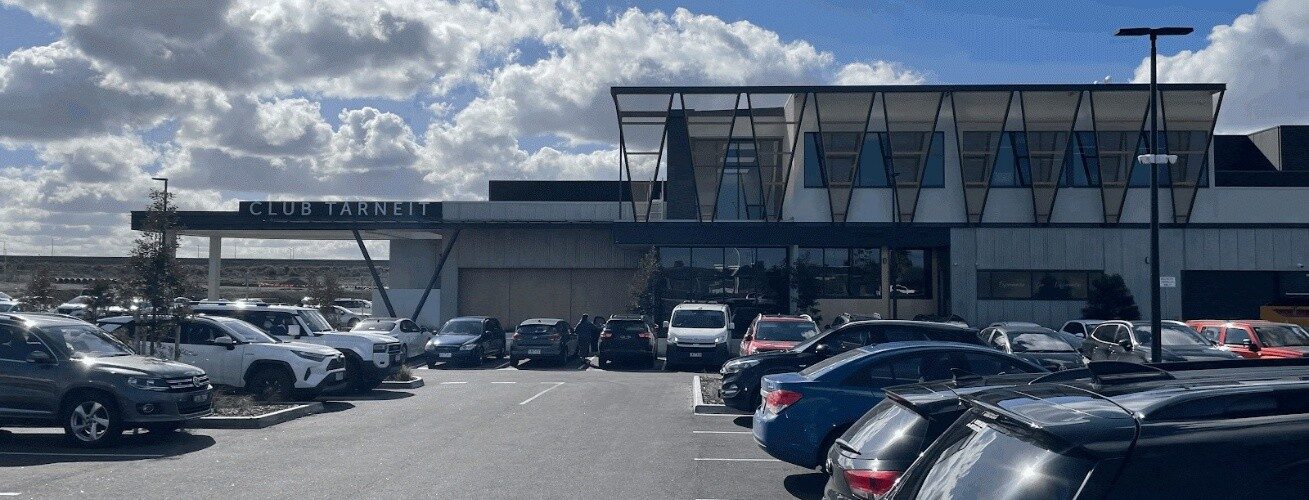
The other is Club Tarneit, a hospitality venue that recently opened in May of 2024, housing 70
pokies machines.
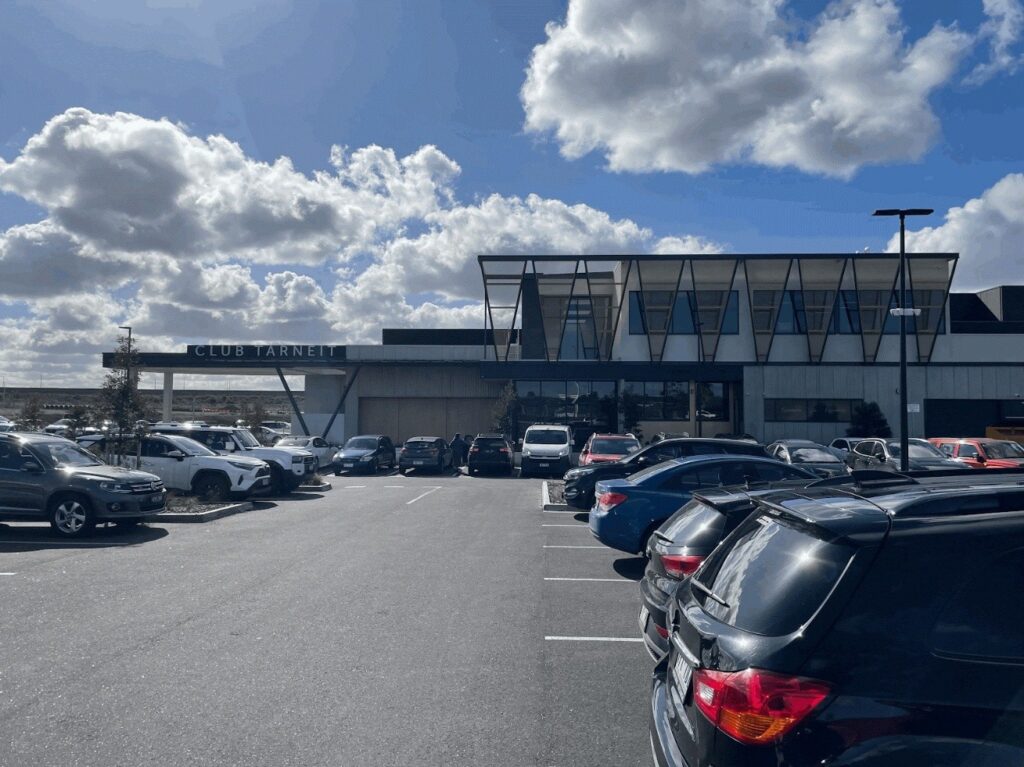
Club Tarneit, one of the two entertainment venues owned by Werribee Football Club (Photo: Matilda
McDermott and Justin Schwarze).
In the 2024 to 2025 financial year, the electronic gaming machines in the Tigers Clubhouse
recorded a $17.9 million dollar intake of losses from gamblers according to the Victorian
Gambling Casino Control Commission.
That is nearly $50 thousand dollars a day.
Their other venue, Club Tarneit, recorded $6.1 million dollars in losses from players during that
period.
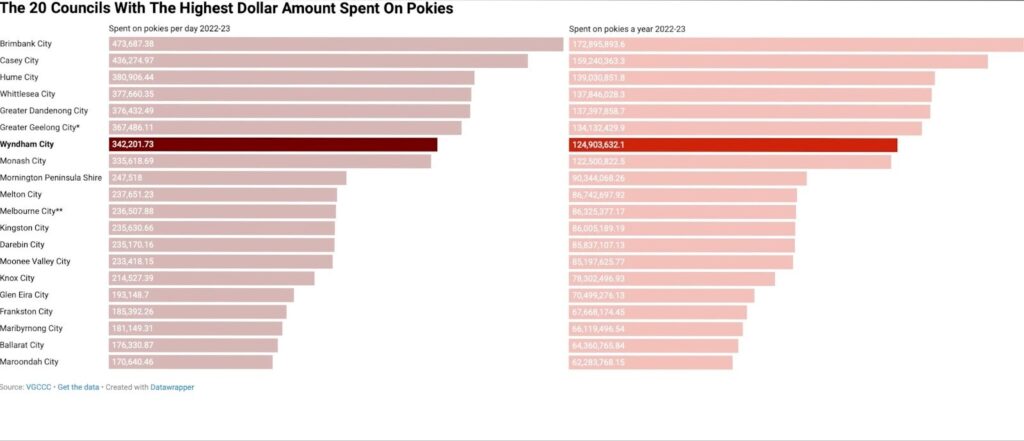
This is contributing to the City of Wyndham’s already huge losses in gambling, with a total of
over $342 thousand dollars lost a day in the 2022 to 2023 financial year shown in the Wyndham
Gambling Harm Prevention Policy Statement.
Being one of the seven standalone VFL clubs, Werribee competes against fellow independent
clubs and Australian Football League (AFL) Reserves teams at the state level.
Being a standalone club comes with a plethora of challenges, including not receiving financial
input from an AFL alignment and competition to retain players with local clubs offering more
lucrative deals to players.
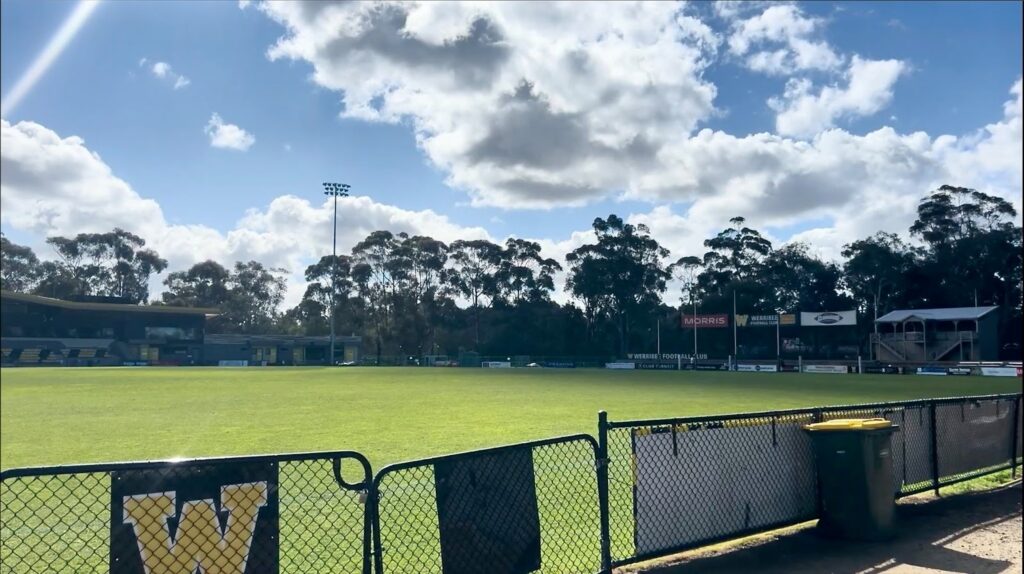
Werribee Football Club grounds (Photo: Matilda McDermott and Justin Schwarze).
This means Werribee, and other standalone clubs, have to navigate ways to pay their staff,
players and venue fees, often relying on the wider community and leaning heavily on volunteers
to remain viable to play in the league.
Whilst the figures are overwhelming, with the constant financial uncertainties surrounding VFL
standalones, is it understandable that Werribee have gone down this route to achieve both
financial and on-field success?
Wyndham’s Ongoing Struggle With Gambling Harm
While the Werribee Football Club revel in their newfound financial freedom and their 2024
premiership, their local community, Wyndham, battles an ongoing gambling epidemic.
In early 2021, The Victorian Commission for Gambling and Liquor Regulation (VCGLR)
approved the 70 pokies machines at Club Tarneit, to backlash from the local community and
council.
The Wyndham City Council Gambling Harm Prevention Policy in December of 2023, detailing its
residents losses from 2022 to 2023 from electronic gambling machines (EGMs) to be over
$124.9 million.
This equates to over $342,201 per day in that financial year, ranking Wyndham as the seventh
highest in losses per municipality in the State of Victoria.
https://datawrapper.dwcdn.net/2V3i4/1/
Rebecca Paterson, the Director of Policy, Leadership Councils and Government Engagement at
the Alliance for Gambling Reform, believes there’s a “very significant cost” to the community from gambling.

Rebecca Paterson, (photo: https://www.agr.org.au/)
The Alliance for Gambling Reform is a national organization aiming to reduce gambling harm
and has outlined the wide-reaching impact of these venues.
“Think about it in the way that every dollar that’s spent, there’s two dollars worth of social costs
to the community as a whole,” Paterson said.
“That includes things like emotional and psychological harms, including mental health issues
and suicide, relationship impacts like divorce or family violence.”
Paterson is also concerned that community clubs organisations like VFL clubs feel they need to
turn to owning pokies to remain viable and competitive.
“I think it sends the wrong message to the community, I think it sends the wrong message to
players and families and kids who are playing or are part of the club or looking to become part
of it,” she said.
“It really normalises gambling, because this is an adult product, it’s a product that’s designed for
people over 18.”
“I think it’s just unfortunate that we’ve created an environment where that’s an option for clubs to
be able to gain a bit of an edge over competitors.”
“It would be great if clubs had other options and if they were competing on a level playing field
by having similar opportunities to access funding.”
But without other options and the eye-watering numbers that gaming machines can produce, it
can be difficult to turn down other paths.
Ifraah Hassan works as Senior Therapeutic Counsellor with the Salvation Army Gambling
Support Service and lives in Melbourne’s west.
It’s here where she sees first hand how easily gambling addiction can take hold and the impact
it has on the community.
“It could be just for fun, going out with a couple of mates, maybe having a big win or thinking
that it was a nice night out and want to go again and then one thing seems to lead to another,”
she said.
According to Hassan, it becomes an issue when gamblers can’t stop thinking about pokies and
becomes secretive about their addiction.
“The impact is huge not only to themselves but to the community, because they might get into
debt, they might not be able to pay for what they need.”
While Hassan understands the financial benefits pokies bring to sporting clubs by supporting
people to play sport and to sustain clubs, she says they create larger negative impacts to the
wider community.
“I don’t think (sporting clubs) really have a greater understanding of how impactful it is for a
person who might be playing footy for that club and how that is impacting them in the grand
scheme of things, I think it’s a double-edged sword.”
Hassan believes greater transparency around pokie machine profits, and knowing how much
money individuals lose, could prompt people to rethink how much they spend at pokies.
“It would wake a lot of people up to actually understand the amount of revenue that venues or
businesses are actually getting from them and how it is harming them in the long run.”
“Then they can come and seek some help, as I don’t think services like ours are really well
known.”
Finding and seeking help can be difficult for people struggling, as resources may seem scarce.
The lack of local support avenues or lack of information about these services invites those
suffering from addiction to feel stranded.
A Wyndham Resident’s Lived Experience With Gambling Addiction
Merapi Gabriel lived with a gambling addiction in Wyndham, just one kilometre away from
Werribee Football Club’s Venue, Club Tarneit.
Originally from New Zealand, Gabriel noted there were at least four gambling venues within
walking distance from her house, and these regular visits would soon turn into date night with
her husband.
“We came here really looking for a fresh start but it was on the bus route, it’s amazing with these
places, it (pokies) was so easy to get to,” she said.
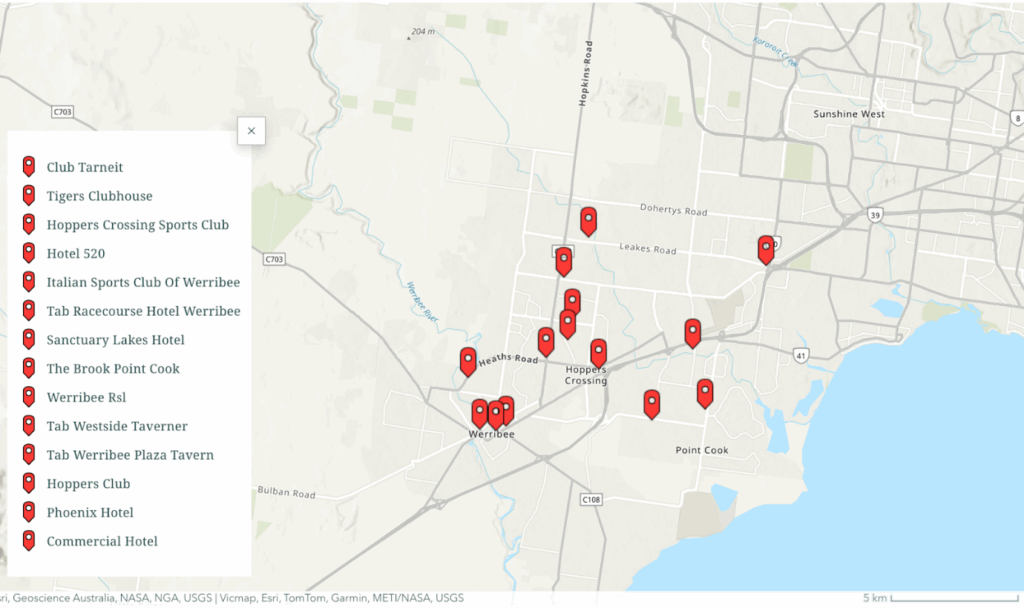
All venues that hold pokies machines in Wyndham.
After battling with the addiction for around a decade, Gabriel reached out for help, but struggled
with finding a local service.
“There was no support here, there were no groups,” she stated.
“There was nowhere we could go and speak to other people that were going through what we
were going through, and couldn’t find anything in the west.”
“I ended up reaching out to Heidelberg because that was the closest one that had a support
group.”
Gabriel believes that if VFL clubs and similar organisations are associated with pokies, they
should have support services in place to help those that are becoming consumed by the
addiction.
“If they’re going to give permits to these places to run, they should also be providing support
systems for when people crash because it’s inevitable, it’s gonna happen,” she said.
“I think it’s only their duty of care to make sure that that happens.”
How do other standalone VFL clubs survive?
Frankston Football Club, known as the Dolphins, is another standalone VFL club who have
never had an AFL alignment, despite being in the competition since 1966.

Steven Finnochiaro, (photo: https://frankstonfc.com.au/team/?admin#team_admin)
“Being standalone is a core part of our identity,” Club President Steven Finnochiaro said.
However, being a standalone club comes with its own set of financial pressures without the use
of electronic gaming machines.
Frankston went through a period where it owned 27 pokies machines but they were removed in
2016 after the club entered voluntary administration.
The debt amounted to around $1million dollars, partly related to their ownership of the
machines, which resulted in the club losing their license in the VFL for the 2017 season.
“They were shut off at a time of big turmoil for the club,” Finocchiaro said.
“When you assess it holistically, yes their removal was good, because pokies bring a lot of
negative social impact to the community.”
“However, it makes it extremely difficult to compete in the league without them, so there’s a bit
of a catch there, our job would be much easier if we had them, but that’s not to say that we want
to.”
“It was a decision made out of necessity and we’ve just all moved on, but not having them is just
that little bit extra difficult,” he said.
Although Frankston has moved past pokies, Finocchiaro understands why VFL teams such as
Werribee, Williamstown and Southport keep them for financial support.
“(The clubs) still provide a net social benefit whilst they do have some revenue from pokies,
they’re a sporting club and they provide jobs for people and a pathway for people to play
football,” he said.
And whilst these clubs are pillars of the local community, they are still businesses that run at a
cost.
Turning over significant profit and navigating finances continues to be an issue that independent
clubs run into.
Frankston was able to overcome the license removal and financial hardship with the assistance
of the state government waiving 90 percent of the club’s debt; with the Dolphins returning to the
VFL in 2018.
After recent events, the Preston Football Club will be hoping to replicate a similar rebound.
The historic club lost its VFL license on 6 October 2025 due to concerns over mounting financial
debt and on-field non-competitiveness.
The struggles of the club over recent years have been well-documented with Preston President
Neil Howard outlining why the Bullants were doing it tough.
“You just don’t get the exposure and really you get the breadcrumbs, we’re the minnows in the
ocean,” Howard said.
“You’d have other employees in relation to players, so you’d have a list that would be extensive
from, say, 38 to 42 players on any one list.”
“You’ve got your coaching staff, your doctor, your physiotherapist, your conditioning coach, your
statisticians, and then you’re probably looking at unpaid volunteers, and you need a circle of
them.”
“We’ve got to survive marketing talent, and that marketing includes your sponsorship, your
merchandise, your apparel, your memberships, your canteens, all those things that are running
per week.”
“But of course, they quickly get absorbed by all those costs.”
“If you’re playing at home, before the first ball is bounced in the center square, you’re looking at
paying your players, your doctors, your physiotherapists, your general manager, who’s on a
salary.”
“You’ve got to have $25 thousand in your pocket, and that might be a slight understatement, it
might be around 30 to 32 thousand.”
“We just cannot survive.”
Thus, standalone clubs look to other avenues to avoid a similar fate to Preston.
The correlation between financial and on-field success seems to be evident.
Since COVID, all four VFL grand finals, including 2025, have featured one of Werribee,
Southport (a Queensland-based VFL club with over 290 pokies machines) and an AFL reserves
side.
With Werribee’s success, there is also the reality of the cost to the community.
The pokies help the club succeed in a landscape that is extremely difficult to navigate financially
as a standalone, but the gambling losses and lack of support in the Wyndham area and
Melbourne’s west as a whole cast uncertainty around the situation.
The Werribee Football Club and Wyndham Council were contacted for comment.
For gambling support you can call lifeline on 1800 858 858 or go to Gambling Help Online.