
The Bureau of Meteorology is forecasting a warmer-than-usual winter and below-
average rainfall across much of mainland Australia in 2026, but University of
Melbourne climate scientist Dr Mandy Freund says a developing El Niño is not the
main contributor.
While an El Niño is likely to be declared later in this year, Dr Freund stressed that
the long-range forecast and El Niño are not as linked as the article reads, and that the
warmer forecast is more likely due to general climate change and El Niño is likely
later in the year irrespective of the BOM’s most recent report.
The Bureau’s report forecasts above-average daily and nightly temperatures are
increasingly likely across Victoria – possibly negatively impacting farming regions in
south-east and south-west Victoria.
Dr Freund urged the public not to panic, saying that El Niño has not yet been
declared nor reached Australia and that El Niño is not currently affecting the
country’s climate.
“El Niño is just developing in the tropical Pacific. We can see sea surface
temperatures warming up, but this has no impact on Australia at the moment,” she
said.
Dr Freund stressed that the unusually warm forecasted winter is instead most likely
due to general background warming and regional ocean conditions.
“It’s most likely we see above-average temperatures due to climate change, but also
the ocean conditions we have locally around Australia,” she said.
She said a developing El Niño was “one contributor, but it’s not the only one and it’s
not the dominant one at the moment.”
Dr Freund also explained that El Niño’s influence generally peaks in spring and not
winter and stressed that while the event is often linked to dry spells and droughts, it
does not guarantee strong effects on agricultural industries and bushfire risks.
“It tilts the odds towards hotter and drier conditions, but it doesn’t lock them in,” she
said.
The Bureau of Meteorology’s report stressed the same thing, stating “While historical
experience of El Niño events can create an expectation that these events will be the
same each time they occur, no two El Niño events are the same.”
The winter forecast follows an abnormally warm autumn, with daytime temperatures
specifically above average across the majority of mainland Australia.
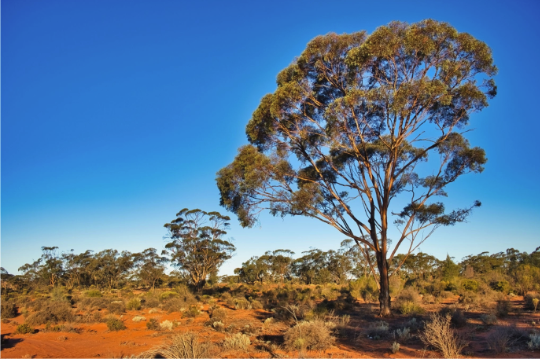
Image by Jake Banjo Matthews.