

Tara Clifford, Miles Earl and Ruby Reilly
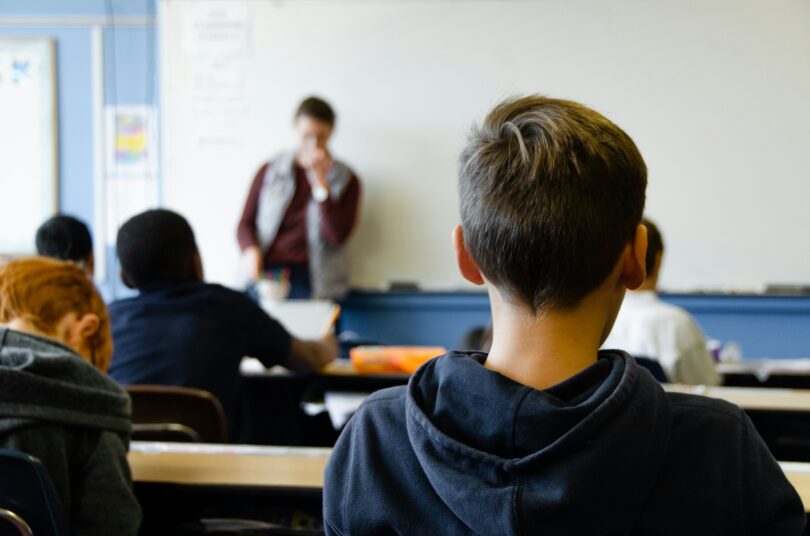
Across Melbourne, teachers are being pushed to the brink by juggling classrooms packed with 30 students. It’s no secret that they’re overworked and under-resourced, but there’s another issue quietly bubbling away beneath the surface: the gifted kids who are being left behind.
With teachers stretched so thin, most of their attention naturally goes to the students who need extra support, leaving the high achievers to drift on their own. These bright young minds are often left unchallenged and under-stimulated, and without the guidance or encouragement they need, many risk never reaching their full potential.
One young teacher, who asked to remain anonymous, shared just how challenging it can be to manage such a wide range of student needs.
“You have to make sure everyone is getting the same learning opportunities,” they said.
“Although this is the ideal for all teachers, in reality, it often means teachers are required to devote more time and attention to the students who disrupt the class, leaving the quieter, self-sufficient, or gifted ones to work alone.”
A major reason gifted children are slipping through the cracks comes down to how schools handle disruptive behaviour. Instead of escalating consequences after repeated offences, many schools rely on a revolving door of suspensions and are sending the same students home time and time again.
There has been a recent surge in suspensions, with a 30 per cent increase over the last five years, of 87,021 students suspended from 2019-2023, resulting in 87 students suspended each day on average.
For a student to be expelled, another school has to want to take them on and place trust in them to not commit the same negative behaviour that got the student expelled in the first place.
The Victorian Department of Education’s findings from 2023 indicate that Year 9 has the most instances of students with behavioural problems in class when measured through expulsion rates.
Out of the 266 students expelled in 2023, 219 were enrolled at another school, 18 were enrolled at another registered training organisation and 13 were not yet placed in an education setting.
These expulsions that have been made are not compensating for the number of students suspended over the last five years, detailing the necessary demand for a timely solution to this problem.
The reasoning behind this troubling behaviour from students is possibly a result of emotional trauma-induced responses from these kids, with some bringing their problems from home into the classroom.
In response to this problem, Deakin University will be the first institution in Australia to embed trauma-informed training across all its teacher education courses through the Berry Street Education Model (BSEM).
Deakin’s School of Education head Professor Damian Blake, explained that the model will help educate trainee teachers to be better equipped to handle problems in the classroom more so than the teachers before them.
“It’s really important for teachers to have a classroom where the students have a higher degree of self-regulation; otherwise, teachers are constantly managing individual students all the time and that’s quite exhausting,” he said.
“We need to give them (teachers) all the skills that we possibly can to manage the complexities of their classrooms.”
“If you have teachers who are not informed in their practice, you’re less likely to have children lead to circumstances where the situations are inflamed in the first place.”
Some of the key ideas and practical tools teachers can use from BSEM include helping them to regulate, engage, connect, learn and thrive in their classroom setting.
The model will be implemented in the first trimester of next year through four-day workshops to manage these students who have been impacted by family breakdowns, financial stress and domestic violence.
“Some teachers are struggling with more complex needs of students and in some cases it’s because students have experienced trauma in their life of one form or another,” Damian said.
“There is a need to better prepare our teachers to respond in ways which are more productive and helpful for those students, rather than sometimes taking a line that may be judgemental in some cases.”
However, while initiatives like Deakin’s aim to better support struggling students, many gifted ones remain overlooked. Leaving gifted students being frequently left without the support they need to thrive.
Two prominent organisations in Victoria that specialise in supporting these gifted children are Born to Soar and GA.T.E.WAYS. Both hold workshops and classes that aim to enrich and engage the curiosity of highly able students.
These organisations are considered part of the solution for those students who may be stuck in a classroom that is unable to meet their needs, in favour of those who demand more behavioural attention.
Meg Pini, Director of G.A.T.E.WAYS, advocates for student accessibility after having grown up in the West of Melbourne and having completed her own schooling through a gifted education course.
“Gifted and high potential students are entitled to learn, a lot of gifted students don’t fulfil their potential if they’re not catered for,” she said.
Meg hopes that she “will always emphasise that we are part of the solution”, and that G.A.T.E.WAYS as an organisation “support[s] schools in providing a holistic approach, but what we do, we do well”.
G.A.T.E.WAYS holds programs online, as well as on-site through host schools and on location venues. Their programs touch on a broad range of skills, from leadership all the way to social sciences.
Although the Victorian Curriculum F-10 establishes a common set of knowledge and skills expected of the typical student in their first eleven years of schooling, it is important to acknowledge every child is different.
“Schools can either outsource to us or use us to support them, because there’s things that we can do that schools can’t,” Meg said.
“If kids go to school and don’t learn, then we failed them. Just because they turn up to school doesn’t mean they’re learning.”
If education is truly about helping every child reach their potential, then schools must find ways to lift up not only those who are struggling to stay afloat, but also those ready to soar, the gifted kids.
