
By Lucy Slevison, Jason Lim and Beatrice Tan
Google ‘Melbourne western suburbs youth crime’ and you’ll be confronted by stories of robberies, police chases and stabbings involving teenagers. In recent months, there’s been plenty of discussion around what to do with young people ‘running wild’ through the streets of the West.
There’s been calls for offenders to ‘break bail, face jail’ from people like Victorian opposition leader Brad Battin, as well as new legislation from Premier Jacinta Allan designed to crack down on young offenders who post and boast about their crimes online.
Within this debate, what is often overlooked is the economic cost of locking up young people.
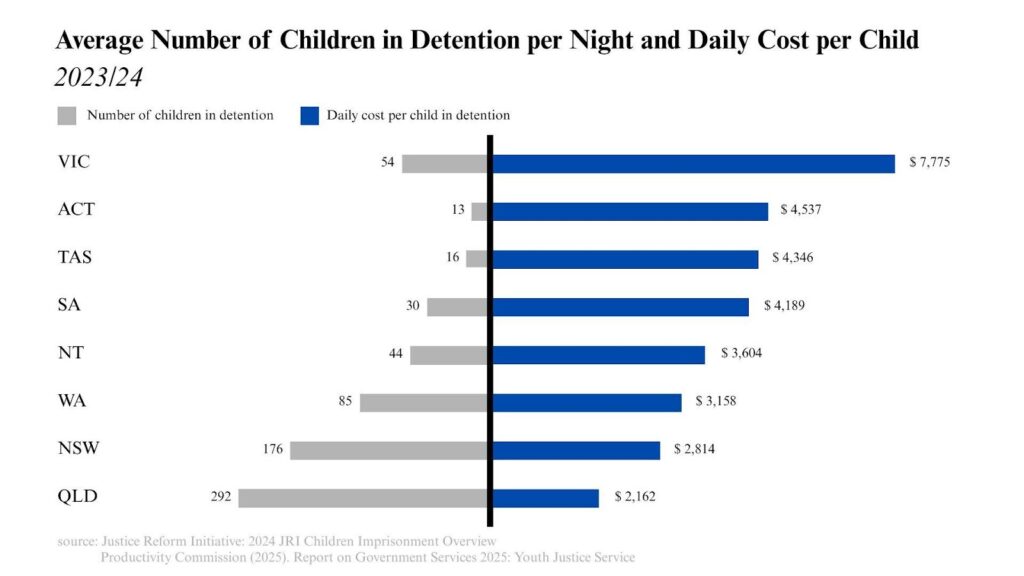
According to the Justice Reform Initiative (JRI), the daily cost of operating youth detention facilities in Victoria per child is $7,775, the most out of all states and territories. The JRI estimates in New South Wales (NSW), Australia’s most populated state, the daily operating cost of detention is $2,814.
The Productivity Commission estimates that it costs $5,900 per day to keep a young person in detention in Victoria, and estimates the daily operating cost of detention in NSW is $2,759 per day.
Figures from the New South Wales Department of Communities and Justice state the cost per day of keeping youth in detention in NSW is $2700.
Despite Victoria’s high operating costs, on an average night, the number of children in detention in Victoria is 54, as per data from the Justice Reform Initiative. This is less than Queensland, New South Wales and Western Australia.
In Melbourne’s West, speaking to Werribee residents on Watton Street, it’s clear there is mixed opinion on how to deal with young people engaging in criminal behaviour.
“Rather than punishment, I think they should be better educated,” Peter said.
“I don’t believe in jail, but I do believe in some kind of discipline,” Carolyn said.
When asked by The City Journal whether she thought children who commit crimes should be punished through jail, Kristie said, “yes, and then some.”
All three residents agreed that youth crime is something that concerns them.
But do their feelings match the statistics?
According to the Crime Statistics Agency (CSA), from June 2024 to June 2025, there were 1,011 criminal incidents across Wyndham council area where the alleged offender was aged 10 to 17. This makes teenagers the largest cohort of alleged offenders in Wyndham.
The levels of youth offending vary between different parts of the West.
In Brimbank, another local government area in the West, there were 387 incidents in the year ending June 2025 where the alleged offender was under 18. Those aged 10 to 17 made up the smallest cohort of alleged offenders in Brimbank, while the age group with the most recorded criminal incidents was people over the age of 45.
To respond to community concerns around both general and youth crime, the Victorian government is allocating budget dollars to address community safety, but some programs and initiatives get more investment over others.
The 2025/26 Victorian budget invested $727 million to fund 1,000 adult prison beds at the newly opened Western Plains Correctional Centre in Lara, north-east of Geelong, as well as funding 88 beds to open at youth justice facilities Parkville in Melbourne’s inner-north and Cherry Creek, located in Little River, 11km from Werribee train station.
The Greens Spokesperson for Justice Katherine Copsey criticised the government’s use of budget dollars.
“Just imagine what we could be doing if we spent that $727 million on provision of stable public housing for people instead, so they’ve got a foundation to contribute and to feel secure,” Ms. Copsey said.
“Everyone wants to feel safe in their community, and everyone wants to see young people thriving.”
To help young people turn their lives around, the “best approach is to invest in prevention and diversion,” the MP said.
This year’s budget allocated $3.8 million to fund the Embedded Youth Outreach Program (EYOP), which operates out of Werribee and Caroline Springs Police Stations. Under this program, police officers and youth workers are paired to provide assessment, support and referral services for vulnerable young people and prevent possible future reoffending.
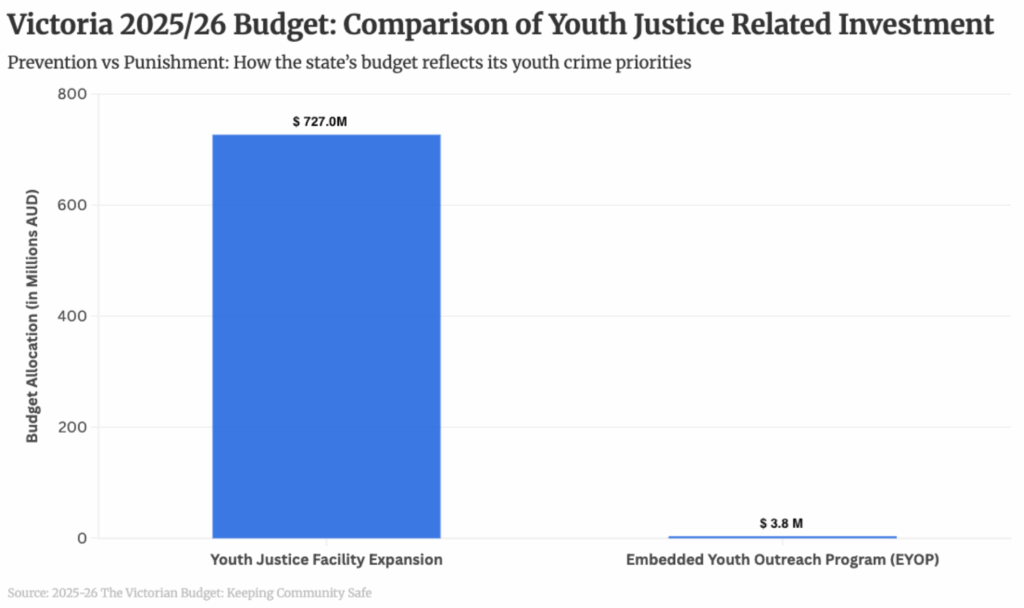
Comparison of what gets investment in this year’s Victorian budget. Graph by Jason Lim ©
Also in the budget, $106.4 million was allocated to strengthen the youth justice system, which will be achieved by “more intensive oversight of high-risk young people, family support workers as well as in-house rehabilitation services that address behaviour using effective, evidence-based approaches,” budget papers say.
Legalise Cannabis MP David Ettershank, who represents the Western Metro Region in Victoria’s Legislative Council, is a strong proponent for engaging young people in education.
“One of the really first points of consideration is keeping kids at school,” he said.
He believes the rapidly-growing West could benefit from greater investment in infrastructure such as transport and schools. “You have governments spending so much money to keep kids locked up when you could be solving other problems,” Mr. Ettershank said.
“If you are a young person [in the West], you’re in the growth corridors. There are very, very few services where you live. There is no public transport where you live. How do you get to those wraparound services? How do you get to where the jobs are? How do you get to where the schools are?”
In the 2025-26 budget, $322 million was set aside to upgrade 35 schools across Victoria, alongside $237 million to acquire land for new schools in suburbs across Melbourne, including in the western suburb of Melton.
Speaking to The City Journal, Ettershank applauded the work of local community organisations such as WEstjustice, whose targeted programs seek to engage with western suburbs kids.
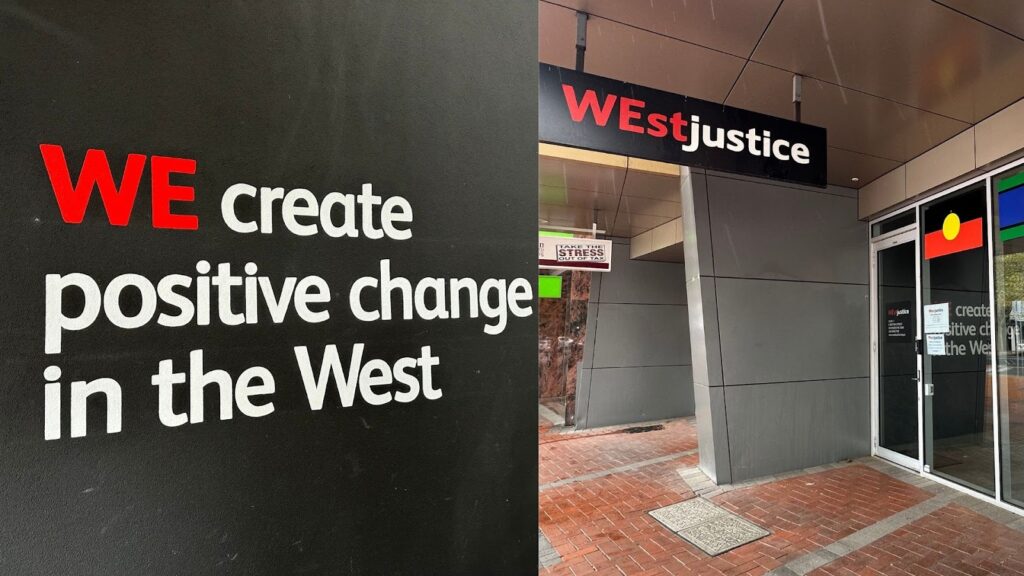
WEstjustice’s aim is to provide free legal help to people in the West. Their program, Target Zero, focuses on eradicating youth criminalisation within the western suburbs. The complementary program alongside this is Project 100, which is all about getting young people to finish Year 12.
The two programs are “really good examples of that wraparound suite of services, an aspirational change to get people going the other way,” Mr. Ettershank said.
Target Zero is funded by various public and private stakeholders, including the Victorian Legal Services Board and charity Paul Ramsay Foundation, which last year announced $7.5 million in funding over the next five years for this program.
WEstjustice also conducts a school lawyer program, where lawyers are placed within public school communities to assist students and parents with a broad range of legal issues including family violence matters and homelessness. This program is funded through the government’s Department of Education.
In 2023, WEstjustice was granted $480,000 over three years by the state government’s Victorian Legal Services Board and Commissioner.
Over the past year, the state government has introduced a number of laws to try and curb crime.
In March, the Victorian government passed laws which are designed to make getting bail tougher. The laws involve stricter tests for determining whether an alleged offender should receive bail or not.
The new laws also enforce that being remanded in custody is no longer considered a last resort tactic for young people accused of serious crimes.
Post and boast laws, passed in August, make it an offence for criminals to publish content online bragging about their involvement in serious crimes. In a press conference at the time of the law’s passing, Premier Jacinta Allan said the laws “respond to the dangerous trend among young people chasing clout on TikTok and Snapchat about their heinous crimes.”
Rocket Bretherton, a coordinator for the Justice Reform Initiative, told The City Journal recent government legislation won’t have an effect on crime rates.
“When you’re caught up in a life of crime, you are caught up in a life of crime.
“You’re not thinking about what the government’s doing and what laws they’ve got,” she said.
Owen Virtue is the director of policy, impact and engagement at WEstjustice and he says engaging with the young people of the West is a fundamental part of what his organisation does.
“I think our approach is to identify whatever that particular young person needs in order to divert them away from the criminal justice system, either before they offend or if they offend, then we make sure they don’t do it again,” he said.
WEstjustice aims to provide services that “address the reasons that [a young person] started even thinking about offending”, whether those reasons be financial security issues, family violence experiences or other negative circumstances, Mr. Virtue told The City Journal.
Despite the service’s critical work, residents of the inner-West have lost close physical access to WEstjustice, with the organisation’s Footscray office now closed. This leaves offices in Werribee and Sunshine.
WEstjustice’s decision to focus its services in Sunshine and Werribee was based on the noticeable higher demand for the organisation in these areas, Mr. Virtue said.
“In general, the idea about social community services is you try and be where the people are.”
Like David Ettershank, Greens MP Katherine Copsey proposed stronger funds into education to turn young people away from crime, when she spoke to The City Journal.
The Greens “would much rather see the government put the money where we know it will work,” Ms. Copsey said.
“It’s frustrating to see the government continue to go down this road [in their response], which we know will actually lead to further entrenchment of young people in the criminal justice system.
“What will actually make us all safer and support young people is investment in all those fundamental social supports – housing, education, drug and alcohol treatment, mental health support,” Ms. Copsey said.